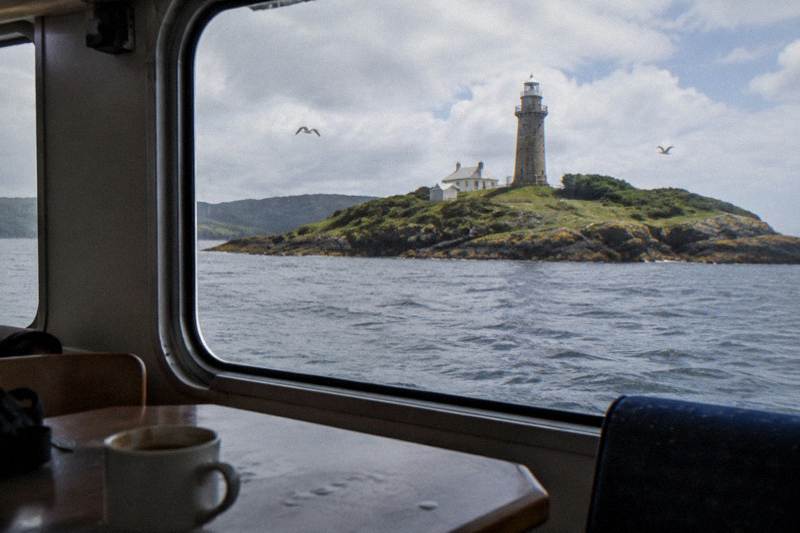
Heritage Landing Rainforest Walk: What The Gordon River Cruise Stop Really Shows You
Heritage Landing is the rainforest stop on a Gordon River cruise, an elevated boardwalk through the Franklin-Gordon Wild Rivers National Park where the tannin-dark water, the ancient Huon pine and more than 1900 mm of annual rainfall add up to one of the most distinctive shore stops in Tasmania.
Short answer
Heritage Landing is a boardwalk stop on the lower Gordon River, about 40 km from Strahan by water, inside the Franklin-Gordon Wild Rivers National Park. Cruises spend about two hours on the river including the walk. The boardwalk passes living Huon pine, myrtle and sassafras rainforest beside tannin-stained water. Both Strahan operators call there: fares start at A$160 per person.
What Is The Heritage Landing Rainforest Walk?
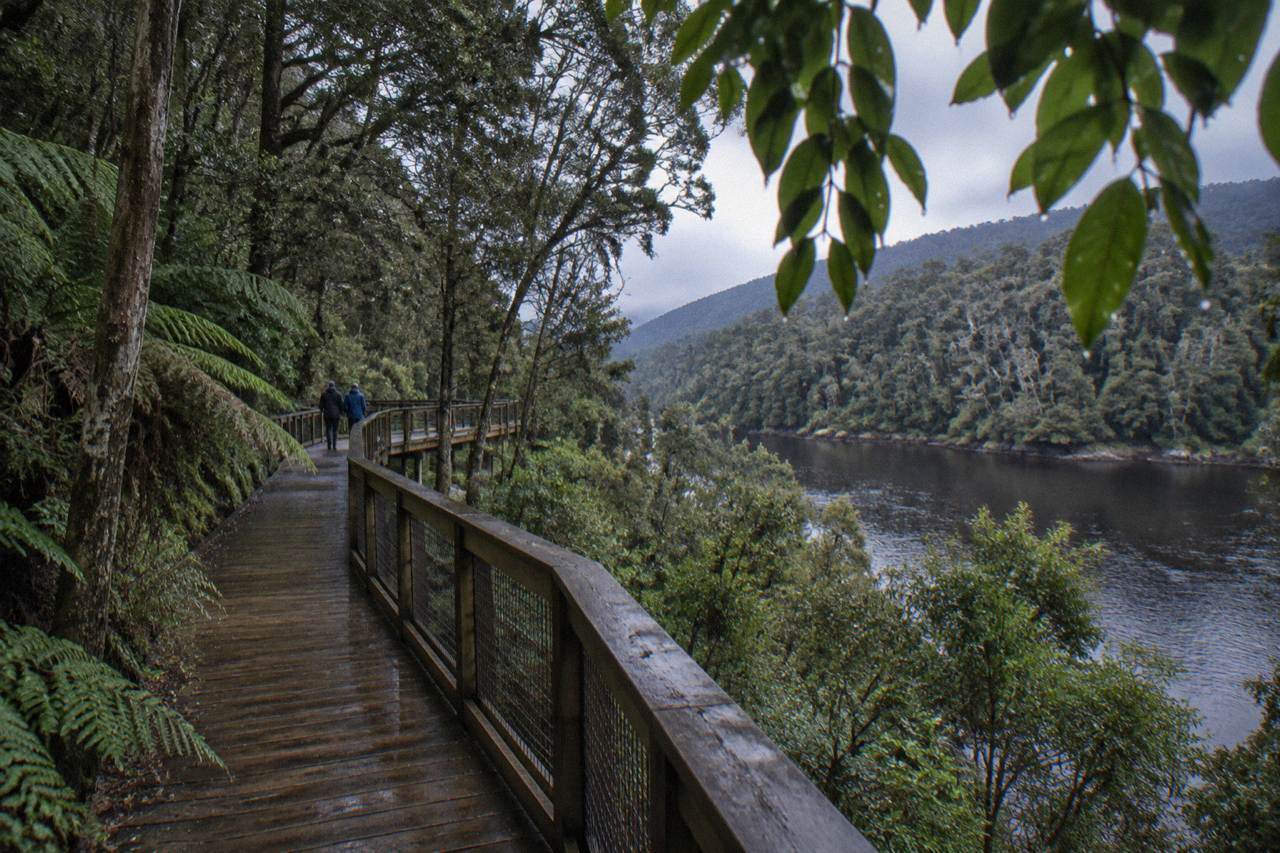
The Heritage Landing rainforest walk is a short, elevated timber boardwalk through temperate rainforest on the west bank of the lower Gordon River, inside the Franklin-Gordon Wild Rivers National Park. Cruise boats from Strahan tie up at a small jetty, and passengers follow a loop through myrtle, sassafras, leatherwood and living Huon pine before reboarding. No road reaches the spot, so the only practical way onto the boardwalk is by boat.
That last point is worth pausing on. Strahan sits on Macquarie Harbour, about 40 km from the mouth of the Gordon River by water, and the river itself runs through roadless country. The park that surrounds Heritage Landing is described by the Tasmanian Parks and Wildlife Service as lying in the heart of the Tasmanian Wilderness World Heritage Area, a property of more than 1.58 million hectares that covers almost a quarter of the state and was first inscribed on the World Heritage list in 1982. There is no car park, no trailhead sign and no walking track in from anywhere. The boardwalk exists because cruise boats brought people here, and cruise boats remain the only way in.
The walk itself is deliberately gentle. It is built as an elevated structure, which does two jobs at once: it keeps walkers above the wet forest floor and it keeps thousands of boots off the root systems of plants that grow painfully slowly. Temperate rainforest in western Tasmania receives over 1900 mm of rain a year in this park, and the ground is permanently damp, spongy and moss-covered. The boardwalk lets a cruise load of passengers experience that without trashing it.
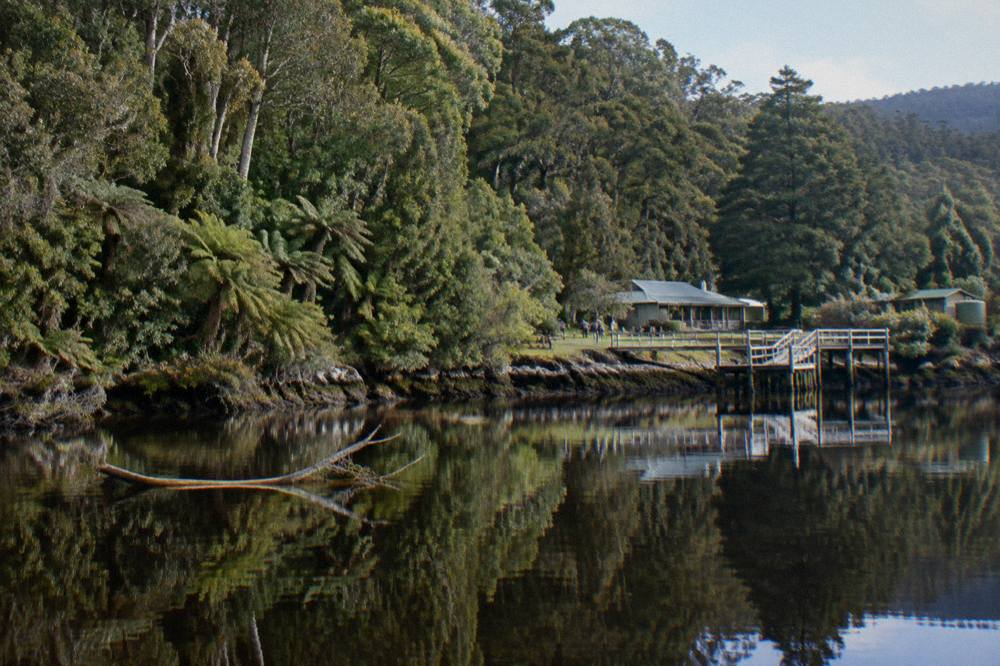
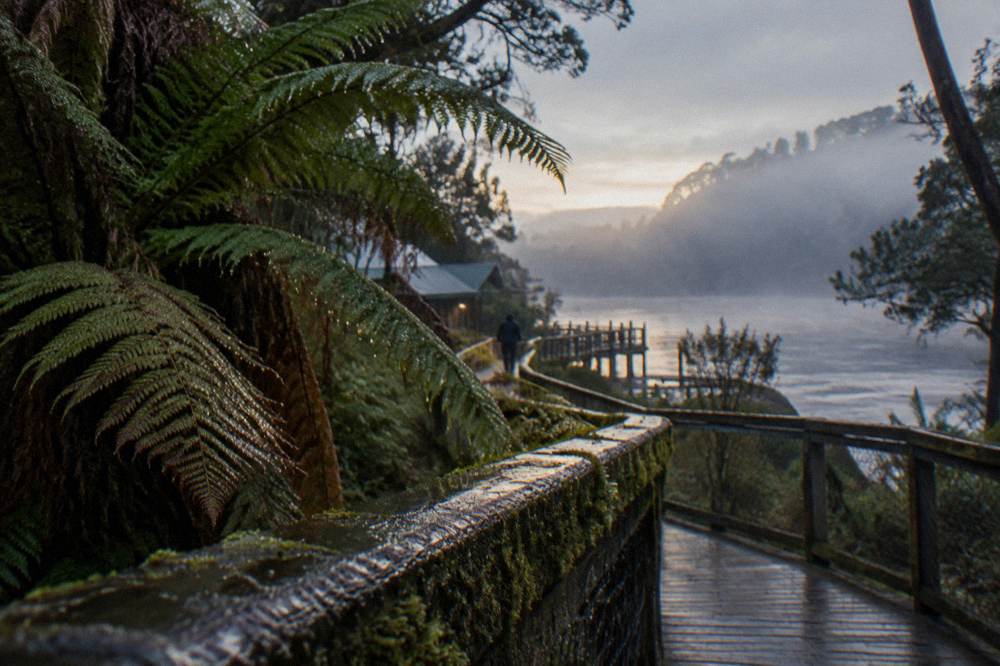
What makes the stop unusual, in a country where rainforest attractions are usually a drive and a short stroll from a town, is the water itself. The Gordon runs tea-brown to almost black. Tannins leached from peat, buttongrass and rainforest vegetation stain the freshwater the colour of strong tea, and on a calm day the surface becomes a mirror that doubles the forest. Passengers regularly describe the reflections as the single most memorable image of the day, and the dark water is the reason they exist.
Where Is Heritage Landing And Why Do The Boats Stop There?
Heritage Landing sits on the lower Gordon River inside the Franklin-Gordon Wild Rivers National Park, reached after the roughly 40 km run from Strahan to where the river meets Macquarie Harbour. The boats stop there because it is the one point on the river where a safe landing, a walkable flat terrace of rainforest and a manageable time budget all line up. The full cruise covers 65 nautical miles, about 120 km, and returns to Strahan about six hours after leaving.
The geography explains the stop better than any brochure does. Macquarie Harbour itself is a shallow fjord of about 315 square kilometres with an average depth of only 15 metres, and the World Heritage Cruises FAQ puts its size at three times that of Sydney Harbour. A cruise day crosses that harbour, passes the salmon and ocean trout farms, threads the narrow Hells Gates entrance to view the Southern Ocean, and then runs up the Gordon. By the time the boat reaches Heritage Landing, passengers have been on the water for a couple of hours and the river has narrowed to a dark, glassy corridor between rainforest walls. That corridor is what everyone came for.
The stop is timed around the river's mood. The lower Gordon is at its calmest and most reflective in the early and middle parts of the day, before afternoon wind ruffles the surface, so operators structure the whole sailing to put the boat on the reflective stretch at the right hour. The Gordon River Cruises morning departure at 8:30am is described by the operator as designed to be first boat on the river for the reflections; the World Heritage Cruises morning sailing leaves at 9:00am. Both then work through the same sequence: harbour, fish farms, Hells Gates, the river, Heritage Landing, and on the return leg the Sarah Island penal station ruins, which operated from 1822 to 1833 on an eight-hectare island that recorded more than 180 escape attempts.
Ashore, the walk is a loop. You step off the jetty, climb a short set of steps into the forest, and follow the boards through a stand of rainforest that includes living Huon pine along the river edge, the tree this coast was once logged almost to extinction for. The Huon pine story deserves its own telling, and the Huon pine guide covers the tree, the piners and the sawmill stop in full; for this page the short version is that Heritage Landing is one of the few places a visitor can stand beside living, wild Huon pine without an expedition.
The two operators handle the stop slightly differently in sequence but identically in substance: both include the Heritage Landing rainforest boardwalk on their standard morning cruise, and both describe it as a guided or self-paced walk of the same loop. Neither runs a longer or shorter version of the walk; the boardwalk is the boardwalk.
If you are weighing up which sailing to book, the trio below covers the two morning lunch cruises that call at Heritage Landing and the seasonal evening dinner cruise that also includes the stop.
What Will You Actually See On The Heritage Landing Boardwalk?
The boardwalk delivers a compact catalogue of Tasmanian temperate rainforest: living Huon pine with its silver-striped bark along the river bank, massive myrtle beech trunks, sassafras, leatherwood in flower in summer, tree ferns, ground ferns, mosses carpeting every horizontal surface, and the tannin-black Gordon running silently alongside. Most passengers complete the loop in 20 to 40 minutes at a steady pace, with time to stand at the river edge and watch the reflections.
The forest type here is cool temperate rainforest, which is a different thing from the tropical rainforest most Australians picture. The canopy is dominated by myrtle beech, a slow-growing southern beech whose trunks can reach enormous age. Underneath it sit sassafras, whose leaves smell of something between sarsaparilla and cinnamon when crushed, and leatherwood, the tree that gives Tasmanian beekeepers their famous honey and which flowers in pale clusters through summer. The shrub layer is horizontal scrub and a dense ground cover of ferns: soft tree ferns, mother shield ferns and filmy ferns that only thrive where the air itself is wet.
Then there is the moss. In a forest receiving over 1900 mm of rain a year, every fallen log, every rock and every buttress root wears a green coat of mosses and liverworts. Photographers spend the whole stop crouched at knee height, because the detail work at ground level is as rich as the canopy. Fungi appear after rain, and after rain is the normal state of this forest.
The Huon pine is the headline tree, and the reason the boardwalk matters historically. Huon pine grows extraordinarily slowly and produces an oil that makes its timber rot-proof, which is why piners stripped accessible stands from west coast rivers through the nineteenth century, and why the convict station on Sarah Island was first established in 1822 with timber-getting as a core purpose, as the Parks and Wildlife Service's Sarah Island page records. At Heritage Landing the living trees stand metres from the walk. Look for the finely stringy, drooping foliage and the bark that sheds in thin strips; the tree's name is something of a misnomer, since it is not a true pine at all but a member of an ancient southern family.
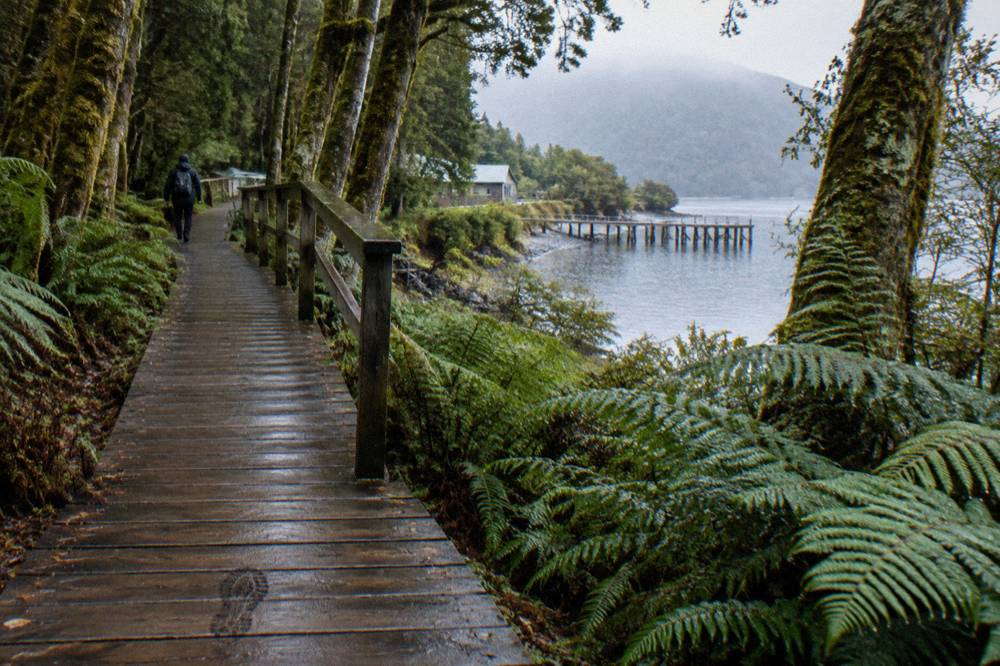
The river edge is the other half of the stop. Where the boardwalk runs closest to the bank you can look down at water the colour of black tea and see the forest doubled in it. The tannin comes from the catchment upstream: peat soils, buttongrass plains and rainforest litter all leach tannic acids into the water, and the stained freshwater actually limits how deep light penetrates. On a still morning the surface is a perfect mirror, and the boat slows or drifts on this stretch for exactly that reason.
One honest note on wildlife: this is not a zoo stop. You may see forest birds, and in the quieter corners of the day the calls of currawongs or the scratch of a scrubwren are common, but the boardwalk's appeal is botanical and atmospheric rather than a fauna parade. The stillness is the point.
How Much Rain Falls At Heritage Landing, And When Should You Walk It?
The Franklin-Gordon Wild Rivers National Park receives over 1900 mm of rain a year, and the nearest long-term weather station at Strahan Aerodrome averages 1495.9 mm across 178.8 rain days a year, so you will walk the boardwalk in damp air whenever you come. The numbers still separate the months: February is the driest at 68.8 mm over 8.9 rain days, while August averages 181.4 mm over 19.9 rain days.
Rain is not a reason to avoid the stop; it is the reason the stop exists. This forest type is defined by rainfall, and the boardwalk is at its most atmospheric when the moss is wet and the tree trunks are dark with it. But comfort varies, and the monthly averages from the Bureau of Meteorology's Strahan Aerodrome record give a real basis for choosing a travel window.
| Month | Mean max (C) | Mean min (C) | Mean rain (mm) | Rain days (1 mm+) | Daylight (about, hours) |
|---|---|---|---|---|---|
| Jan | 21.2 | 11.0 | 77.4 | 10.1 | 15 |
| Feb | 21.2 | 10.8 | 68.8 | 8.9 | 14 |
| Mar | 19.6 | 10.0 | 103.9 | 12.8 | 12 |
| Apr | 16.8 | 8.6 | 114.7 | 14.0 | 11 |
| May | 14.4 | 7.5 | 158.9 | 17.8 | 10 |
| Jun | 12.8 | 5.7 | 155.3 | 16.1 | 9 |
| Jul | 12.4 | 5.4 | 176.4 | 18.9 | 9 |
| Aug | 13.1 | 5.7 | 181.4 | 19.9 | 10 |
| Sep | 14.4 | 6.4 | 148.4 | 18.6 | 12 |
| Oct | 16.2 | 7.3 | 121.4 | 15.9 | 13 |
| Nov | 18.0 | 8.5 | 97.1 | 12.7 | 15 |
| Dec | 19.4 | 9.8 | 95.9 | 13.1 | 15 |
Read that table as a planning tool rather than a forecast. December through February combines the lowest rain-day counts with the longest daylight, roughly 14 to 15 hours, which matters because a six-hour cruise plus a drive into Strahan eats a whole day. March and November are the shoulder picks: fewer crowds, mean maxima still around 18 to 20 degrees, and rain days in the low teens. Midwinter is wet, with rain on roughly two days in every three and only about nine hours of daylight, but the forest is at peak mood and the boats still sail, with one important exception below.
The seasonal-weather picture across the whole cruise year, including what to wear in each window, is covered in the Gordon River cruise seasons and weather guide; the short version for this stop is that waterproof layers matter in every month, and the boardwalk is slippery somewhere on its length almost every day.
One scheduling trap catches planners every year: World Heritage Cruises does not sail on Christmas Day and does not sail at all from 1 to 31 August 2026, its listed annual maintenance month. For any later August, check the dates, the operator has listed August as its maintenance month. Gordon River Cruises morning sailings run through winter, but if your heart is set on a specific operator, confirm the date before you book accommodation.
Which Cruises Actually Stop At Heritage Landing?
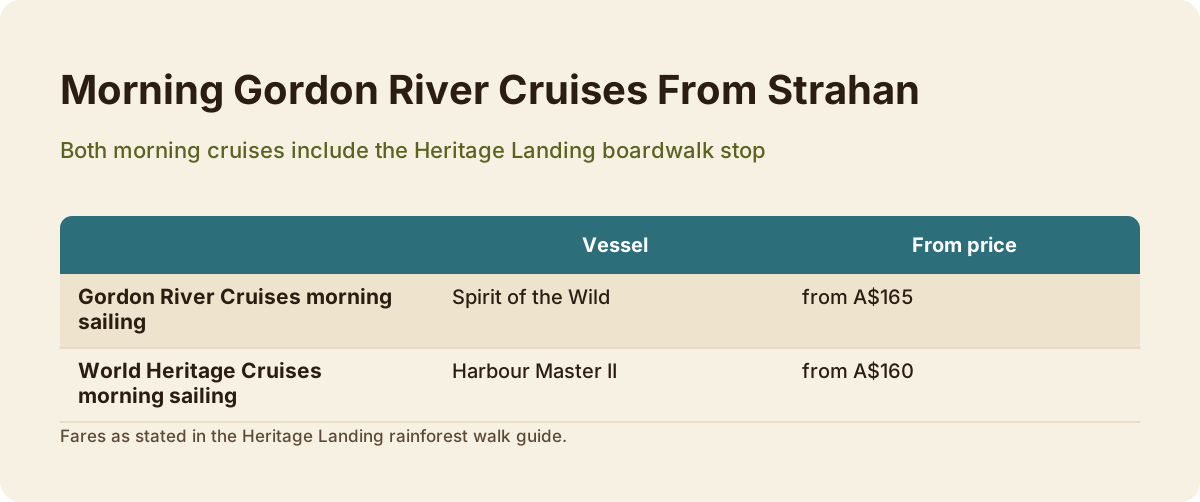
Every standard Gordon River cruise from Strahan includes the Heritage Landing boardwalk: the Gordon River Cruises morning sailing on Spirit of the Wild from A$165, the World Heritage Cruises morning sailing on Harbour Master II from A$160, and the seasonal evening dinner sailings from both operators. The two morning cruises are near-identical in stops, differing in departure time, vessel and lunch style, and both carry ratings of 4.8 from well over a thousand reviews each.
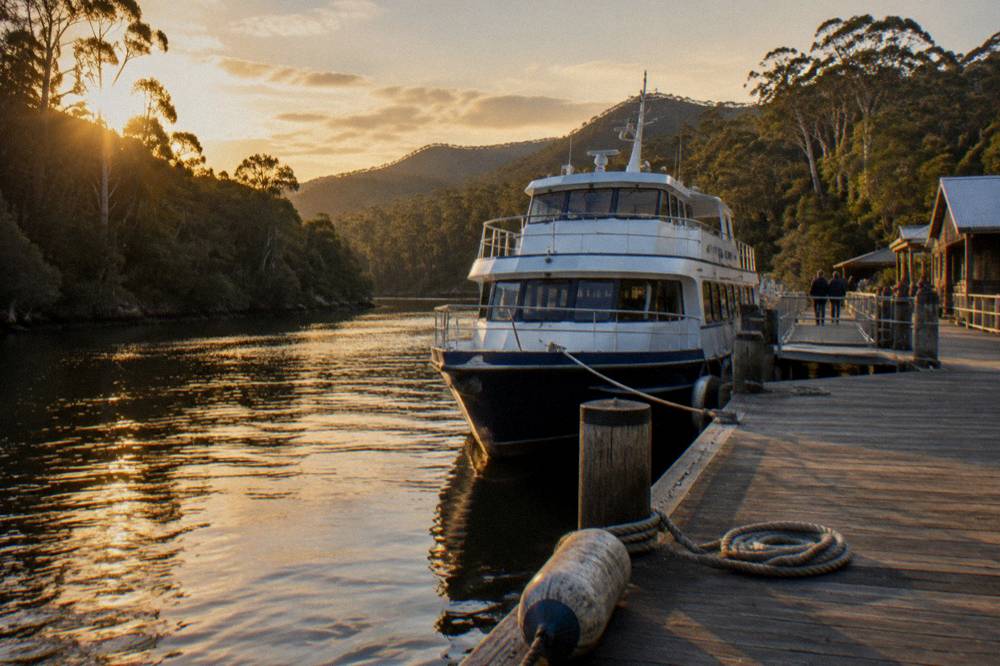
The comparison is genuinely close, so it helps to lay the two morning products side by side on the facts that differ rather than on slogans. Gordon River Cruises is operated by NRMA Parks and Resorts and sails the purpose-built hybrid vessel Spirit of the Wild, which uses electric "Whisper Mode" motors on the river stretch, a real advantage for the reflections and for hearing the forest rather than an engine. Check-in is 8:00am for an 8:30am departure, the trip runs about six hours, and a chef-prepared buffet lunch is served on board. The listing shows a rating of 4.8 from 1,635 reviews, from A$165 per person, with free cancellation. Other pages covering the same trip are gathered on Strahan River Cruises.
World Heritage Cruises is a family-owned company that has been in the hands of the same local family since 1896, and it sails Harbour Master II, a catamaran launched in October 2020 and built in Tasmania. It departs at 9:00am from the booking office at 18 Esplanade on Strahan Wharf, returns about 3pm, and serves a seated lunch of local Tasmanian produce, with morning tea and a beverage on the upper deck classes. The listing shows 4.8 from 1,255 reviews, from A$160 per person, with free cancellation, and the listing notes it is likely to sell out. One difference worth flagging: the World Heritage Cruises FAQ states that the cruise travels into the Franklin-Gordon Wild Rivers National Park and that a National Parks Pass is needed, which WHC does not sell; you buy it from Parks and Wildlife Tasmania.
| Gordon River Cruises Morning | World Heritage Cruises Morning | |
|---|---|---|
| Vessel | Spirit of the Wild, hybrid electric | Harbour Master II catamaran |
| Operator | NRMA Parks and Resorts | Family owned since 1896 |
| Check-in | 8:00am | 8:30am, tickets collected 30 min before |
| Departs | 8:30am | 9:00am |
| Returns | About 2:30pm, about 6 hours total | About 3pm, about 6 hours total |
| From price | A$165 per person | A$160 per person |
| Rating on listing | 4.8 from 1,635 reviews | 4.8 from 1,255 reviews |
| Lunch | Chef-prepared buffet | Tasmanian produce served to your seat |
| Heritage Landing | Included, rainforest boardwalk | Included, rainforest boardwalk |
| Cancellation | Free | Free |
The whale of a difference is not the stops, which match almost line for line: Hells Gates, the aquaculture farms with a tasting on the Gordon River Cruises run, the river, Heritage Landing, and the guided Sarah Island walk. It is the feel. Spirit of the Wild is a single-hulled vessel that goes quiet on the river; Harbour Master II is a stable, spacious catamaran with a big upper deck. Both stop at the same jetty and both put you on the same boards.
For the evening option, the two dinner cruises also call at Heritage Landing, and both are strictly seasonal. The Gordon River Cruises evening dinner cruise runs 27 December 2026 to 2 January 2027 and 14 to 24 February 2027 only, check-in 3:00pm, departing 3:30pm, from A$160, rated 4.5 from 12 reviews, a small number of reviews so treat the rating lightly. The World Heritage Cruises afternoon dinner cruise runs 27 December to 16 January only, departing 3:15pm and back about 8:30pm, from A$160, rated 4.9 from 23 reviews. Neither is a year-round product, and neither should be booked as one.
How Long Do You Get On The Boardwalk, And How Does It Fit The Day?
The river portion of the cruise, including the Heritage Landing boardwalk, runs about two hours in total, and most passengers spend somewhere between 20 and 40 minutes on the boards depending on pace and photography. The stop sits mid-cruise, after the harbour crossing and Hells Gates and before the Sarah Island ruins on the way home, and the whole day runs about six hours door to door.
The shape of the day is worth understanding before you book, because it explains why the stop feels unhurried even though the schedule is tight. The morning sailings leave Strahan between 8:30am and 9:00am. The first stretch is the harbour: fish and salmon farms, the aquaculture leases that have operated in Macquarie Harbour since the 1980s, and the run out to Hells Gates, the narrow, shallow entrance between Macquarie Heads and Entrance Island that convicts named as their entrance to hell and that was given a breakwater and dredging works in 1900 to 1902. Then the boat turns up the Gordon, the engine drops to a whisper or a low hum, and the reflections begin.
Heritage Landing arrives late morning. The boat ties up, the crew opens the gangway, and the walk begins. On the Gordon River Cruises run the crew point out the significant trees; on the World Heritage Cruises run the same loop is walked with similar commentary. There is time to stand at the bank and watch the dark water, and there is usually a queue at the best photo spot on the river-facing stretch of boards. Passengers with mobility concerns should read the accessibility and kids guide before booking, since the boardwalk involves steps and an uneven forest environment, though the loop itself is short.
| Stage of the day | Rough timing (morning cruises) | What happens |
|---|---|---|
| Check-in at the wharf | 8:00am to 8:30am | Boarding passes collected, boarding |
| Macquarie Harbour crossing | 8:30am to 9:30am | Fish farms, aquaculture tasting on the GRC run |
| Hells Gates | Mid-morning | The narrow harbour entrance, ocean views |
| Gordon River run | Late morning | Slow, quiet cruising for reflections |
| Heritage Landing | Late morning | Rainforest boardwalk loop, 20 to 40 minutes ashore |
| Lunch | Midday | Buffet or seated lunch on board |
| Sarah Island | Early afternoon | Guided walk through the penal station ruins |
| Return to Strahan | About 2:30pm to 3pm | Harbour crossing, back to the wharf |
The two hours on the river figure, which comes from the operator's own FAQ, includes both the quiet upstream running and the boardwalk time. That means the river is not a long stretch of the day; it is the concentrated heart of it. Everything else, the harbour, the gates, the island, is framing.
What Should You Wear And Bring For The Heritage Landing Stop?
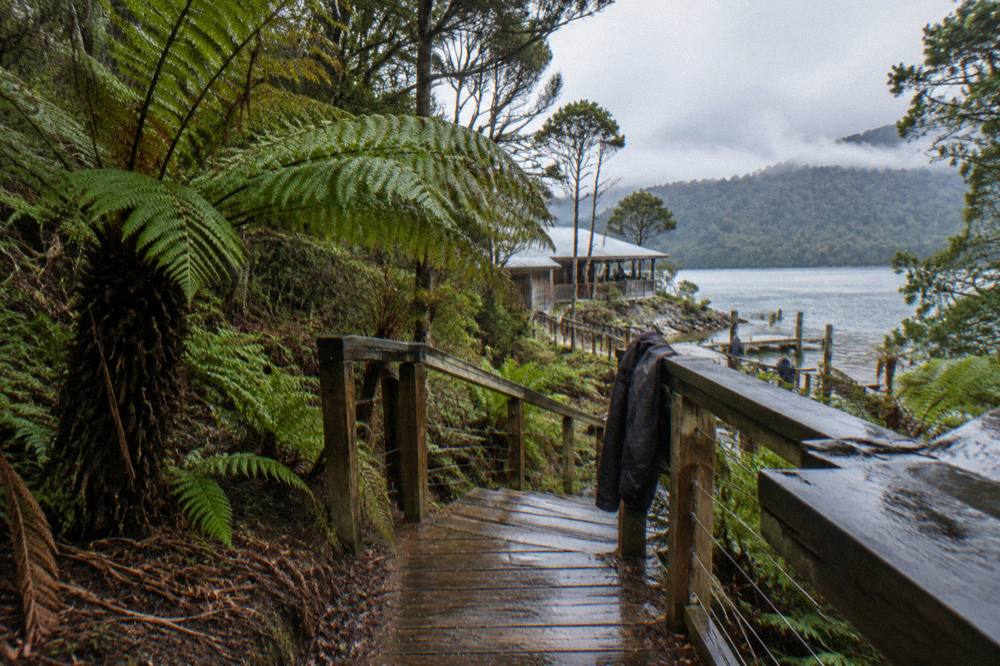
Wear closed, grippy shoes and a waterproof layer, and bring nothing you cannot carry in one hand, because the boardwalk is damp underfoot in every season and the walk happens whatever the sky is doing. The forest floor releases moisture even on dry days, the boards can be slick near the steps, and there is no shelter, shop or bin at Heritage Landing: what you bring, you carry.
Footwear is the single most common mistake. Thongs and smooth-soled sneakers are poor on wet timber. A shoe with a real tread pattern is enough; hiking boots are unnecessary for a loop of this length. A rain jacket with a hood beats an umbrella, which is awkward on a boat and useless under the canopy. In winter, mean minima sit between 5.4 and 5.7 degrees, so gloves and a warm layer matter for the deck time even though the walk itself warms you up.
Beyond clothing, the short list is: a camera or phone you can use one-handed, since the reflections at the river bank are the shot of the day; a small bottle of water; and any medication you normally carry, because the nearest anything is a boat. Insect repellent is worth a thought in the warmer months, as the damp forest hosts mosquitoes and sandflies. The full packing rundown for the whole cruise day, including sea-state considerations for the Hells Gates stretch, is in the what to bring guide.
A note on the forest itself: this is a World Heritage area, and the etiquette is the obvious one. Stay on the boards, take nothing, touch nothing that you would not want a thousand people a week touching. The Huon pines at the landing are old and slow; the mosses take years to build a centimetre. The boardwalk exists so that a cruise load of people can see this without harming it, and it works only if everyone stays on it.
What Does A Cruise That Includes Heritage Landing Cost?
The standard morning cruises that call at Heritage Landing start at A$160 per person for a main-deck centre seat, and the operator fare tables run up to A$355 for the premium upper-deck classes, with family fares from A$340. NRMA members save 15% on the Gordon River Cruises side and Australian seniors card holders get 10% off with World Heritage Cruises. All prices are per person in Australian dollars.
The seat-class question matters more than most first-time bookers expect, because the fare spread is wide and the classes buy different things. The cheapest seats are main-deck centre or central: inside the cabin, close to the windows but not at them. Window seats on the main deck cost more. The upper or premier decks add the best views, extra inclusions such as morning tea and a beverage, and on the Spirit of the Wild premier class, teas, canapes and access to a private deck.
| Seat class | Gordon River Cruises (adult / child) | World Heritage Cruises (adult / child) |
|---|---|---|
| Main deck centre/central | A$165 / A$80 | A$160 / A$75 (ages 3 to 16) |
| Main deck window | A$200 / A$90 | A$195 / A$99 |
| Upper deck centre | Premier Upper Deck A$355 adult and child | A$205 |
| Upper deck window | Included in Premier class | A$225 |
| Family fare | A$345 central, 2 adults and up to 3 children | A$340 centre, 2 adults and up to 3 children |
Two discounts are worth knowing. NRMA members can use a promo code on the Gordon River Cruises booking page to save 15%. World Heritage Cruises offers 10% off for Australian seniors card holders. Neither stacks with the family fares in any way the operators have published, so price both paths if you qualify.
For the dinner cruises, both start at A$160 per person, and both are seasonal in the strict sense described earlier: the Gordon River Cruises evening dinner cruise runs only 27 December 2026 to 2 January 2027 and 14 to 24 February 2027, and the World Heritage Cruises afternoon dinner cruise runs only 27 December to 16 January. The dinner sailings include a buffet dinner, with the GRC Main Deck receiving a complimentary drink at Hells Gates and the Premier Upper Deck an open bar.
Strahan River Cruises compares the Gordon River sailings from both operators on one page, which is the fastest way to see the whole fare table against your dates.
How Heritage Landing Fits A Wider Strahan Day
Heritage Landing anchors a full Strahan day because the morning cruises return to the wharf between about 2:30pm and 3pm, leaving the late afternoon free for the wharf and Esplanade, a stroll to Hogarth Falls from Peoples Park, or the drive to Ocean Beach and the Henty Dunes about 15 minutes north of town. The stop also complements the town's other big story, the convict history of Sarah Island.
The pairing that works best is the cruise plus an evening in town. Strahan is a small place, population 634 at the 2021 census, and everything on the Esplanade is within a short walk of the wharf where the boats leave. The cruise day gives you the World Heritage rainforest and the penal station ruins in one package; the evening gives you the harbour town at its quietest. The free options around town, including the Peoples Park stroll to Hogarth Falls, are gathered in the free things to do in Strahan guide, and the wider set of paid and unpaid activities is in the things to do in Strahan guide.
The rainforest theme is worth following further if Heritage Landing catches your interest, because the boardwalk is only the accessible edge of a much larger story. The Franklin-Gordon Wild Rivers National Park that surrounds the landing was the centre of the biggest conservation battle in Australian history, and the park's own Parks and Wildlife Service page describes a landscape of tannin-stained rivers and rainforest that receives over 1900 mm of rain a year. The World Heritage listing that protects it, first inscribed in 1982, covers more than 1.58 million hectares, and the full story of the listing is on the UNESCO World Heritage Centre's property page.
For the practical end of the day, the wharf logistics matter more than visitors expect: the World Heritage Cruises terminal is at 18 Esplanade with pay-and-display parking about 200 m away at 10 Esplanade, and the Gordon River Cruises terminal sits at 24 Esplanade, so the two operators are neighbours on the same waterfront. The check-in and departure details for both are gathered in the Strahan wharf check-in guide, which is worth a read the night before you sail.
If you are planning the full west coast loop, the drive times are manageable: Hobart to Strahan is about 300 km and 4 hours 30 minutes, and Launceston via Cradle Mountain is about 270 km and 3 hours 30 minutes, per the official Discover Tasmania drive-times page. Most visitors arrive the afternoon before a morning cruise, which turns the Heritage Landing day into a two-day Strahan stay, and the Strahan or Queenstown question is worth settling early since the two towns are only about 41 km apart.
Common Questions About The Heritage Landing Rainforest Walk
How long is the Heritage Landing boardwalk walk?
Most passengers complete the loop in 20 to 40 minutes at a steady pace, with pauses for photography. The river portion of the cruise, including the boardwalk, runs about two hours in total, so the walk is a compact stop rather than a hike.
Do both Gordon River cruise operators stop at Heritage Landing?
Yes. Both the Gordon River Cruises morning sailing on Spirit of the Wild and the World Heritage Cruises morning sailing on Harbour Master II include the Heritage Landing rainforest boardwalk, along with Hells Gates, the fish farms and the guided Sarah Island walk. The seasonal dinner cruises from both operators also call there.
Can you see Huon pine at Heritage Landing?
Yes, living wild Huon pine grows along the river edge at the landing, metres from the boardwalk. It is one of the few places a visitor can stand beside the tree without an expedition, and it is the reason the boardwalk stop matters historically: Huon pine timber-getting was central to the early European history of this coast.
Why is the Gordon River water so dark?
Tannins leached from peat, buttongrass and rainforest litter in the catchment stain the freshwater dark brown to black. The tannin limits how deep light penetrates, but the water is pure, and on calm days it produces the mirror-like reflections the cruise is famous for.
Do I need a National Parks Pass for the Heritage Landing stop?
The World Heritage Cruises FAQ states that its cruise travels into the Franklin-Gordon Wild Rivers National Park and that a National Parks Pass is needed; WHC does not sell it, and you buy one from Parks and Wildlife Tasmania. Check the requirements for your chosen sailing before you board.
Is the Heritage Landing walk suitable for children and older visitors?
The loop is short and flat in the main, but it involves steps and a damp forest environment, so grippy footwear matters. Families and seniors regularly complete it; the specifics on access, prams and pacing are covered in the kids, seniors and accessibility guide.