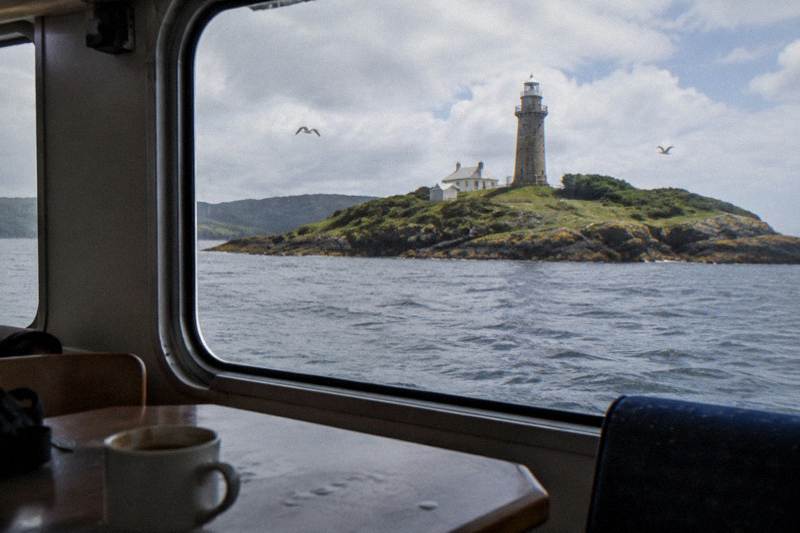
Hells Gates Strahan: The Convict-Named Harbour Mouth Explained
Every Gordon River cruise out of Strahan passes Hells Gates, the narrow, shallow mouth of Macquarie Harbour that convicts named as their entrance to hell. Here is what it is, why it matters, and what the sailings actually do there.
Short answer
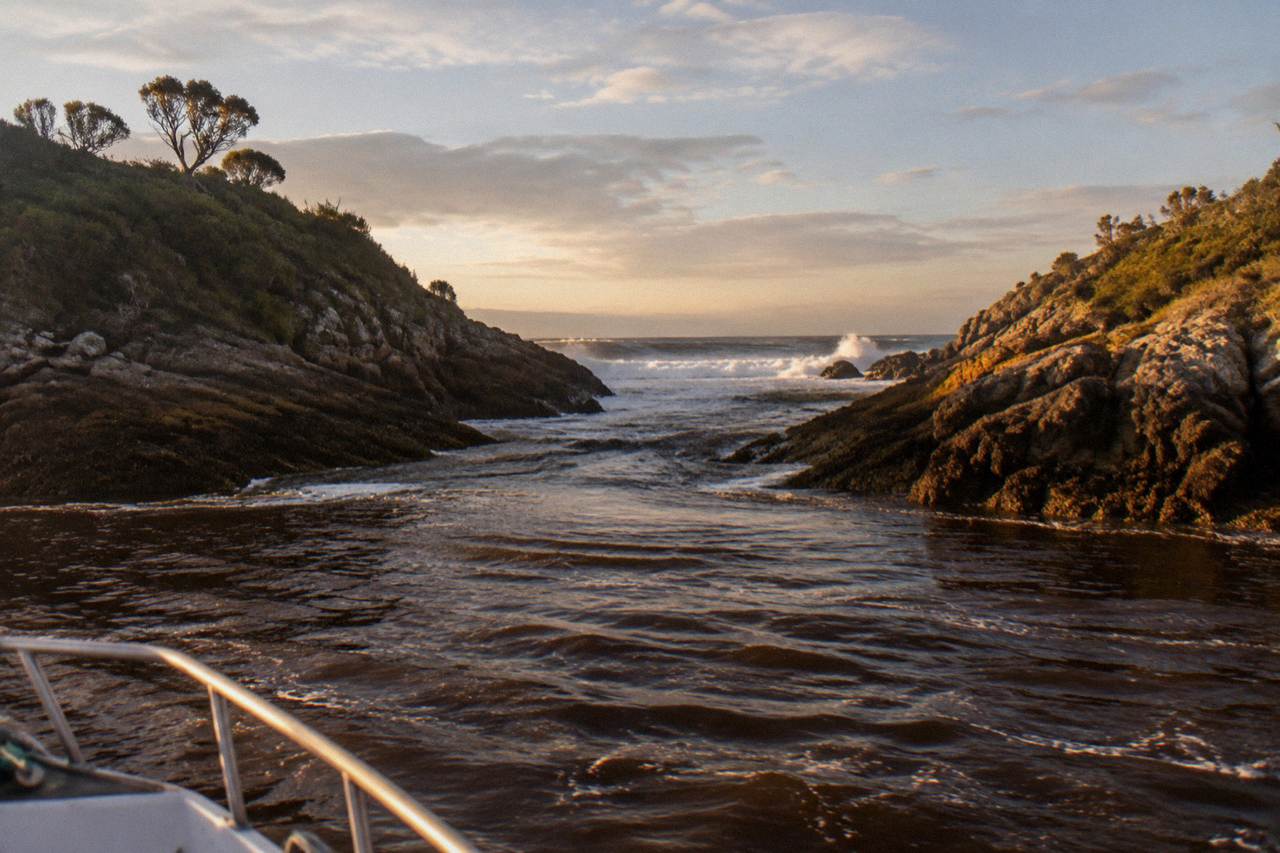
Hells Gates is the narrow, shallow, notoriously dangerous entrance to Macquarie Harbour, named by convicts sent to the Sarah Island penal station, which was established in 1822. The harbour itself is a shallow fjord of about 315 square kilometres with an average depth of 15 metres. Every Gordon River cruise from Strahan, from about A$160 per person, passes through or close to it.
Every morning out of Strahan Wharf, two cruise boats nose west across Macquarie Harbour toward a gap in the coastline that convicts once called their entrance to hell. Hells Gates is the narrow, shallow mouth of Macquarie Harbour, sitting between Macquarie Heads on the west and Entrance Island on the east, and it is the one landmark that every Gordon River cruise shares, regardless of operator. The harbour it guards is a shallow fjord of about 315 square kilometres, roughly three times the size of Sydney Harbour in the words of one operator's own FAQ, yet with an average depth of just 15 metres. This guide explains the name, the engineering, the numbers, and what each sailing from Strahan actually does at the harbour mouth.
What Is Hells Gates At Strahan?
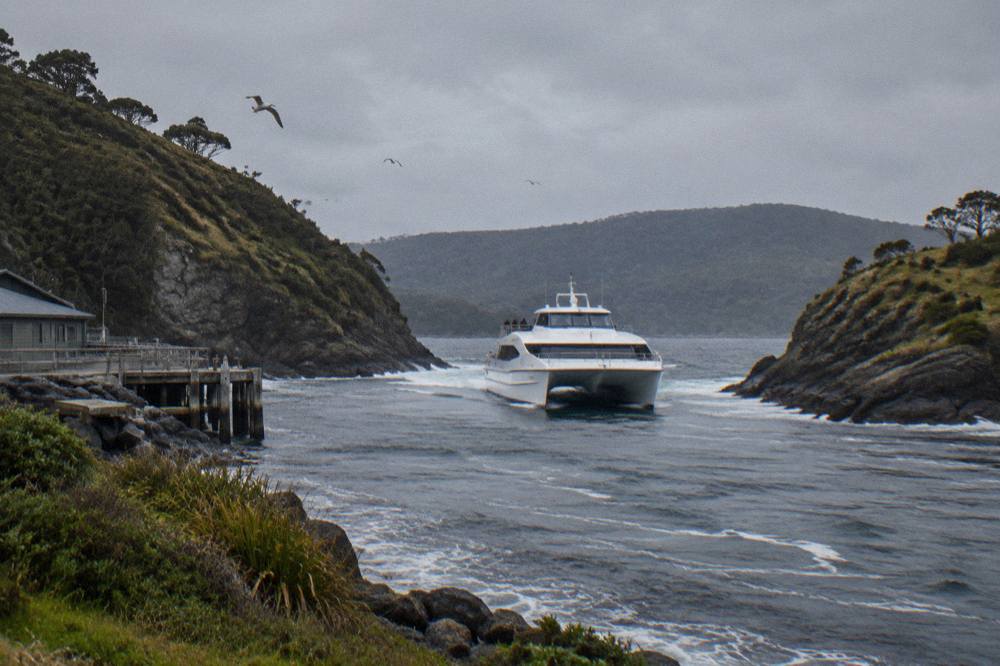
Hells Gates is the narrow, shallow and dangerous entrance channel to Macquarie Harbour on Tasmania's west coast, running between Macquarie Heads and Entrance Island, and it is the point every Gordon River cruise from Strahan passes through or pauses at on the way to the river. It is a natural feature, not a theme park gate, and its danger to shipping was real enough that a breakwater and dredging works were built here between 1900 and 1902. No official figure exists for the channel's width, and any number you may have read elsewhere is a secondary estimate rather than a measured fact, so this guide deliberately leaves it out.
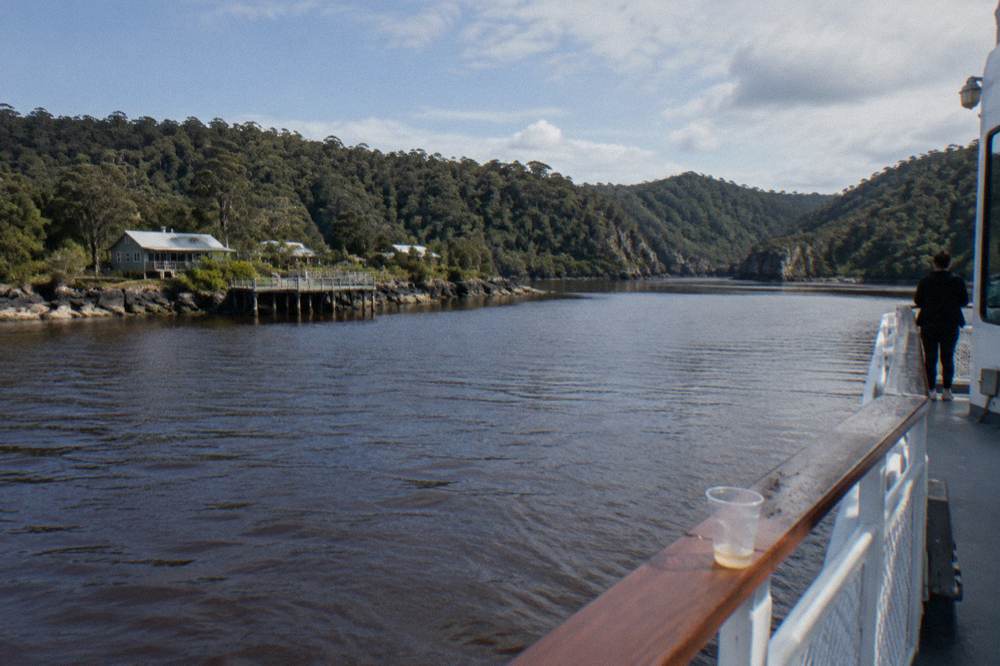
The mouth connects the sheltered tannin-dark waters of Macquarie Harbour with the full force of the Southern Ocean. The harbour behind it is a shallow fjord, about 315 square kilometres in area with an average depth of 15 metres, and it drains a catchment that includes the Gordon River and the Franklin-Gordon Wild Rivers National Park. When swell runs hard from the west, the water at the entrance can churn over the shallow sill in a way that explains why nineteenth century sailors treated it with respect. On a calm morning, by contrast, it can look almost placid, which is part of the surprise for passengers who have read the history first.
The name is the sort of fact that travels well, but the physical reality is less widely understood. The harbour is stratified: a lens of tannin-rich fresh water from the Gordon and King rivers floats over saltier marine water below, which is why the water looks like dark tea and why calm days produce the mirror reflections the region is famous for. The entrance is where those two systems meet the ocean. For more on the dark water and the rainforest it flows through, see the Heritage Landing rainforest walk guide.
Why Did Convicts Call It Hells Gates?
Convicts sentenced to the Sarah Island penal station in Macquarie Harbour named the entrance Hells Gates because passing through it meant entering their hell: the penal settlement established in 1822 on an eight hectare island in the harbour, one of the severest stations in the Australian penal system, from which more than 180 escape attempts were recorded before the station closed in late 1833. The name survives on the map long after the prison that inspired it has become a set of ruins visited daily by cruise boats.
The story is told well by Parks and Wildlife Service Tasmania's Sarah Island page, which records the station's history as a shipyard, bakehouse, tannery and hospital, and notes that for a time the island yard was the largest shipbuilding operation in the colonies. Convicts were sent there largely to cut Huon pine, a timber so slow growing and so waterlogged in the rivers that whole logs could be raised from the riverbed decades after the trees fell. The island's Aboriginal name is Langerrarerouna, and Captain James Kelly visited Macquarie Harbour in 1815 before the penal station was established.
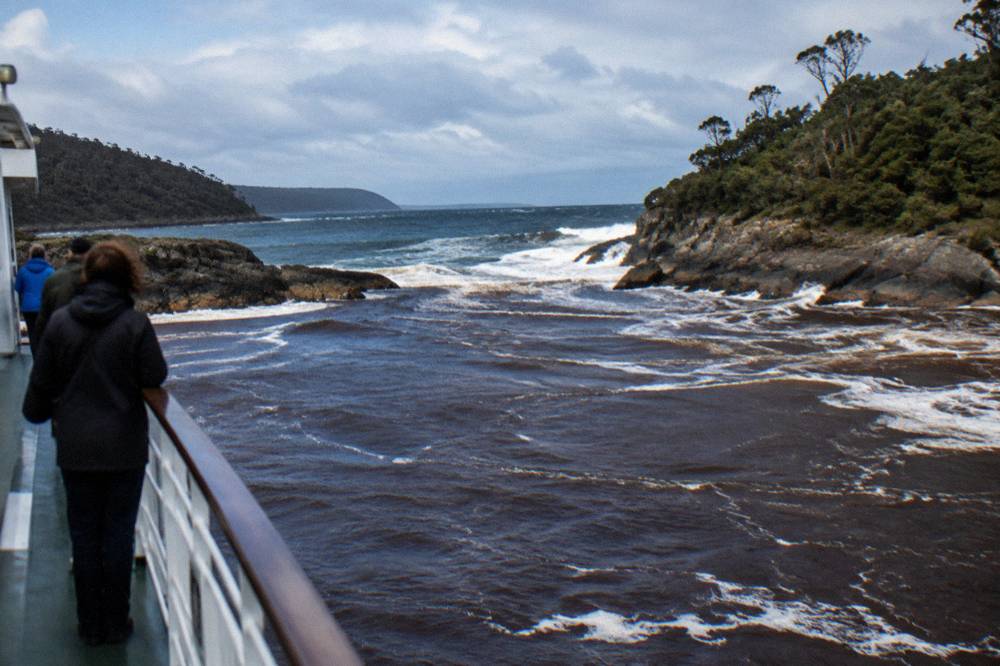
What the convicts saw from the deck of a transport ship was a narrow, shallow gap onto a wild coast, beyond which lay years of hard labour. What a cruise passenger sees today from the upper deck of a catamaran is a dramatic channel with ocean swell on one side and dark harbour water on the other, while a guide explains exactly this history over the PA. The full Sarah Island story, including the guided on-shore walk that both operators include, is covered in the Sarah Island tour guide. The island is part of the Macquarie Harbour Historic Site and sits inside the Tasmanian Wilderness World Heritage Area, a property of more than 1.58 million hectares first inscribed by UNESCO in 1982, as the UNESCO listing record confirms.
How Do The Cruises From Strahan Pass Through Hells Gates?
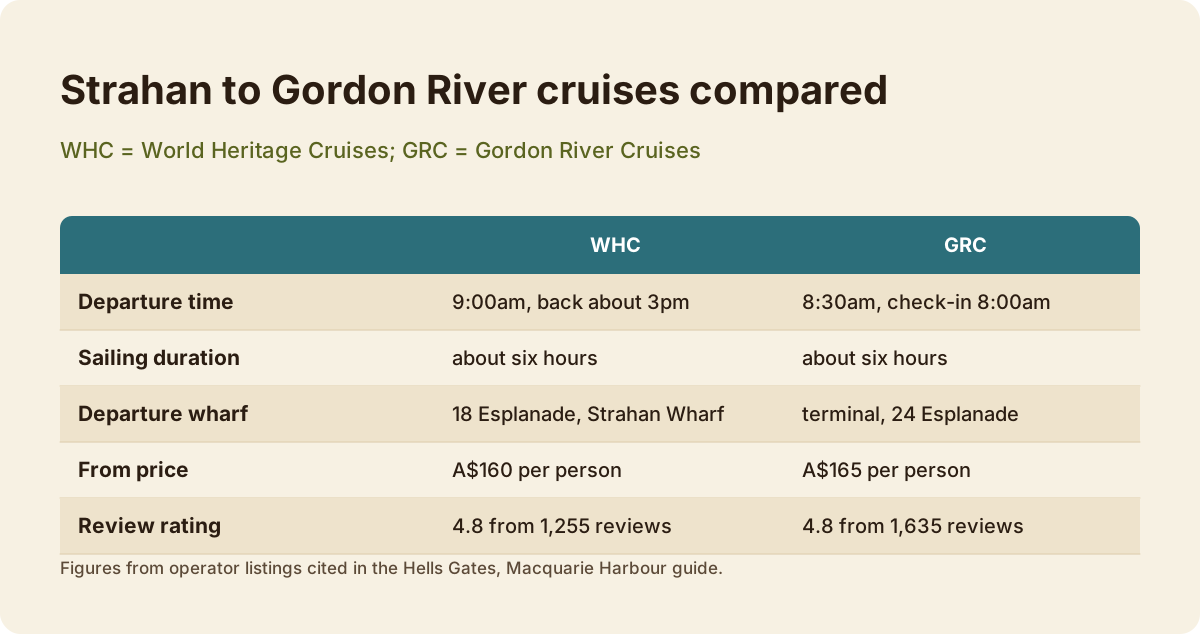
Both operators pass Hells Gates on the way out of the harbour: World Heritage Cruises departs 9:00am from 18 Esplanade on the Harbour Master II catamaran, and Gordon River Cruises departs 8:30am after an 8:00am check-in aboard Spirit of the Wild, with each sailing running about six hours and including Hells Gates, a fish farm stop, Sarah Island and the Heritage Landing boardwalk. The morning cruise is the standard sailing for both, and the harbour mouth is usually the first headline stop of the day.
The two products are close enough in shape that the choice often comes down to departure time, vessel and price. The table below compares the two morning sailings on the facts that matter at the harbour mouth itself. Fares shown are the operators' cheapest adult deck, the "from" price on each booking page, and both are per person in Australian dollars.
| Morning Catamaran, Buffet Lunch (WHC) | Gordon River Cruises, Shared Lunch (GRC) | |
|---|---|---|
| Departure | 9:00am, back about 3pm | 8:30am, check-in 8:00am, about 6 hours |
| Vessel | Harbour Master II catamaran, launched October 2020, built in Tasmania | Spirit of the Wild, hybrid electric with "Whisper Mode" |
| Wharf | 18 Esplanade, Strahan Wharf | Gordon River Cruises terminal, 24 Esplanade |
| At Hells Gates | Passes the entrance en route to the ocean side and fish farms | Passes the entrance en route to fish farms with tasting |
| Lunch | Buffet of local Tasmanian produce, served to your seat | Chef-prepared buffet lunch on board |
| From price | A$160 per person | A$165 per person |
| Rating on the listing | 4.8 from 1,255 reviews | 4.8 from 1,635 reviews |
| Cancellation | Free cancellation when plans change | Free cancellation applies |
One practical note for the WHC sailing: the cruise travels into the Franklin-Gordon Wild Rivers National Park, and a National Parks Pass is needed for that trip. WHC does not sell the pass; it is bought from Parks and Wildlife Tasmania. The morning cruise also does not run on Christmas Day, and WHC does not sail at all from 1 to 31 August 2026, which is the operator's annual maintenance month. If your travel dates fall in August, the GRC morning sailing is the one to check first, and for later Augusts in future years, check the dates, as the operator has listed August as its maintenance month.
If you are weighing the two morning sailings in more depth, the full head to head, including seat classes and family fares, is in the Gordon River cruise comparison guide.
How Big Is Macquarie Harbour, Really?
Macquarie Harbour covers about 315 square kilometres with an average depth of only 15 metres, making it a shallow fjord that one operator's FAQ describes as three times the size of Sydney Harbour; the full cruise circuit is 65 nautical miles, about 120 kilometres, and it is about 40 kilometres from Strahan to the mouth of the Gordon River, with roughly two hours spent on the river including the boardwalk stop. The numbers surprise people who expect a small coastal inlet, and they explain why the cruise takes a full six hours rather than a quick loop.
The shallowness is the key to understanding the harbour's character. A body of water that size, averaging 15 metres deep, behaves differently from a deep port: the tannin-stained fresh water from the Gordon spreads across the surface in a dark lens, light penetrates only a few metres, and the deeper layers hold little oxygen. Scientific work on the harbour describes episodic intrusions of denser ocean water pushing in through Hells Gates, driven by low pressure systems and strong northwesterly winds, events that are more common in winter and late autumn. In plain terms, the harbour mouth is not just scenery, it is the valve that lets the ocean breathe into the basin.
| Figure | Value |
|---|---|
| Harbour area | About 315 square kilometres |
| Average depth | 15 metres |
| Size comparison | About three times Sydney Harbour, per the WHC FAQ |
| Full cruise circuit | 65 nautical miles, about 120 kilometres |
| Strahan to the Gordon River mouth | About 40 kilometres |
| Time on the Gordon River | About two hours, including the boardwalk |
| Tasmanian Wilderness World Heritage Area | More than 1.58 million hectares, first inscribed 1982 |
| Sarah Island penal station | 1822 to late 1833, eight hectares |
The harbour's human geography is just as striking as its physical geography. Strahan itself, the only town on the harbour, counted 634 residents at the 2021 census, yet it hosts two cruise operations sailing daily through the peak season. Salmon farms have operated in the harbour since the 1980s, a fact both cruise itineraries acknowledge openly with a stop at the pens.
What Were The Breakwater And Dredging Works Of 1900 To 1902?
Between 1900 and 1902 a breakwater was built and the entrance channel was dredged to make Hells Gates safer for shipping, works that reshaped the mouth permanently, and the Entrance and Bonnet Island lights that guide vessels through the narrows predate the better known Cape Sorell lighthouse. The engineering is easy to miss from a cruise deck, but the breakwater is visible, and it is the reason larger vessels can use the entrance at all.
Before those works, the mouth was a genuine hazard. The channel is narrow and shallow, and it sits on a coast with no shelter to the west all the way to South America. Ships bound for the Strahan wharves and the mining ports had to time their runs with the swell, and wrecks on the bar were a recurring cost of doing business on the west coast. The 1900 to 1902 works, breakwater construction plus dredging, straightened and deepened the passage enough to change the harbour's economics. The place names around the entrance record the era: Entrance Island and Bonnet Island carry lights that were guiding traffic before Cape Sorell's tower was built. The rest of the planning pages sit on Strahan River Cruises.
| Year | Event |
|---|---|
| 1815 | Captain James Kelly visits Macquarie Harbour |
| 1822 | Sarah Island penal station established |
| 1833 | Penal station closes in late 1833, after more than 180 escape attempts |
| 1926 | Sarah Island gazetted as a tourist reserve |
| 1982 | Tasmanian Wilderness first inscribed on the World Heritage list |
| 1900 to 1902 | Breakwater built and entrance channel dredged at Hells Gates |
| 1980s onward | Salmon farms operate in Macquarie Harbour |
Cruise guides point out the breakwater as the boat turns at the mouth, usually with the story of the name alongside. It is one of the moments where the history and the hydrography line up neatly: the convicts feared the entrance, the engineers tamed it, and the cruise boats now use it twice a day without drama. Passengers on the upper decks get the clearest view of the works and of the ocean swell beyond, which is worth knowing when you choose a seat class; the seat options guide breaks down what each deck costs on both operators.
What Happens At The Fish Farms Near Hells Gates?
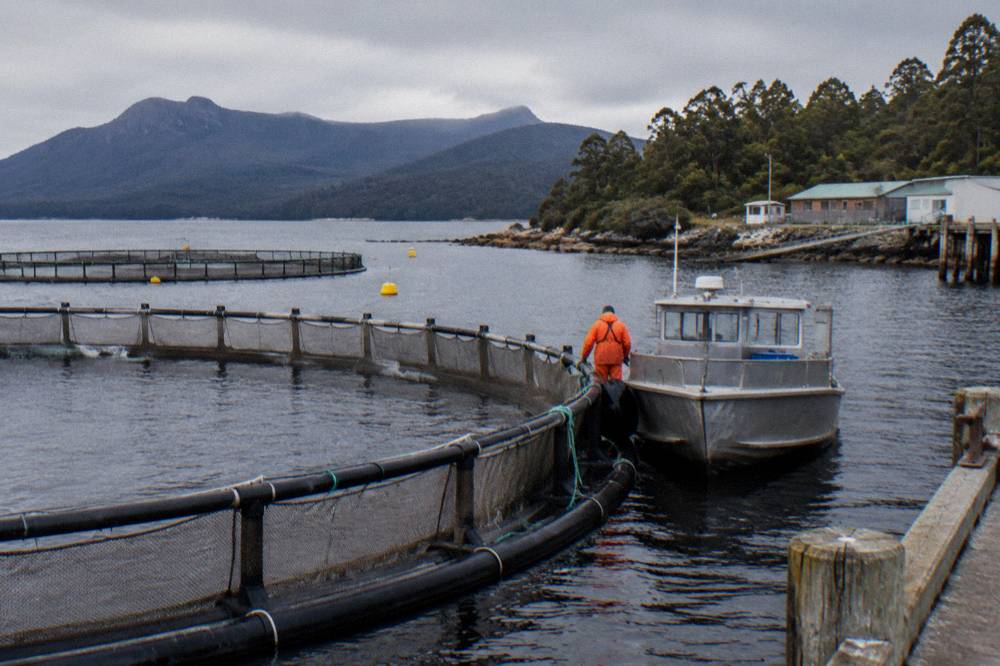
Both cruise itineraries stop at aquaculture pens in Macquarie Harbour, where the GRC sailing includes a tasting at the fish farms and the WHC sailing includes a sample at the aquaculture farms on the way out past Hells Gates, so the harbour mouth visit usually comes bundled with a look at the salmon and ocean trout industry that has operated here since the 1980s. It is a working-harbour stop, not a detour, and it is one of the parts of the day passengers consistently mention in reviews.
The pens sit in the dark tannin water a short run from the entrance. From the deck you can see the circular nets, the feed barges and the work boats, and the guides explain how the stratified water column affects the operation. The GRC morning cruise lists a fish farm visit with tasting among its inclusions, alongside Hells Gates, the Gordon River, the Heritage Landing walk and the Sarah Island guided tour. The WHC morning cruise lists its aquaculture farms stop, with a sample, alongside Hells Gates, the guided Sarah Island on-shore walk, the Heritage Landing rainforest boardwalk and a Huon pine sawmill stop on the return leg.
The sawmill stop is a WHC itinerary detail worth flagging for anyone specifically interested in the pining history that put convicts at Hells Gates in the first place. The Gordon River boardwalk at Heritage Landing is where living Huon pine can be seen on a cruise, trees whose timber drove the whole penal enterprise; the Huon pine guide covers that story, and it is honest that no seaplane, jet boat or pine mill tour is bookable here, the cruise is where you see the living trees.
Which Cruise Gives The Best View Of Hells Gates?
For the harbour mouth specifically, the two morning sailings both deliver it as a scheduled part of a six hour day, from A$160 per person with WHC and from A$165 with GRC, while the seasonal dinner cruises pass Hells Gates at golden hour, with the WHC afternoon catamaran running 27 December to 16 January and the GRC evening dinner cruise running 27 December 2026 to 2 January 2027 and 14 to 24 February 2027 only. The honest answer is that the view is similar from either operator, and the differences are in timing, vessel and what surrounds the pass.
The morning catamaran cruise is the site's featured pick for this page, and it suits the Hells Gates question well. The Harbour Master II is a Tasmanian-built catamaran launched in October 2020, upper decks give an open view over the entrance, and the day includes the Sarah Island walk and the rainforest boardwalk in the one fare of from A$160 per person. It rates 4.8 from 1,255 reviews on the listing, and the listing itself flags that it is likely to sell out, which is worth knowing in peak summer. Free cancellation applies when plans change.
The GRC morning sailing aboard Spirit of the Wild makes the same harbour mouth pass about half an hour earlier in the day, with the 8:30am departure, and its hybrid electric "Whisper Mode" matters most later on the Gordon River, where the quiet running produces the reflections. It rates 4.8 from 1,635 reviews, from A$165 per person, with free cancellation applying to this cruise. Between the two, the Hells Gates experience itself is close to identical, so the decision usually turns on the seat class pricing, which differs more than the headline fares suggest.
The dinner sailings are a different animal. The WHC afternoon catamaran cruise runs only 27 December to 16 January, departing 3:15pm and returning about 8:30pm with a buffet dinner of local specialties included, from A$160 per person, and it has a small number of reviews, 23 in total, so treat its 4.9 rating as a small pool rather than a verdict. The GRC evening dinner cruise runs 27 December 2026 to 2 January 2027 and 14 to 24 February 2027 only, check-in 3:00pm, boarding 3:15pm, departing 3:30pm, from A$160 per person with 12 reviews, so the same caution applies. Neither should be described as year-round, and anyone travelling outside those narrow windows should book a morning sailing instead.
When Should You Sail To See Hells Gates At Its Best?
The most reliable months for a calm harbour mouth are December to February, when mean maximum temperatures sit at 19.4 to 21.2 degrees, rainfall averages 68.8 to 95.9 millimetres and rain falls on about 9 to 13 days per month, though the cruises run most of the year and the moody winter version of the entrance has its own following. The trade-off is crowds: summer is peak season, and the listings flag sell-outs, while shoulder months from March to April and November offer thinner crowds with workable weather.
The climate record for Strahan, from the Bureau of Meteorology's averages for Strahan Aerodrome, shows the west coast's character clearly: rain on roughly 18 to 20 days per month through winter, annual rainfall of 1,495.9 millimetres at the aerodrome and over 1,900 millimetres in the nearby park. Winter highs sit around 12 to 13 degrees. None of this stops the boats, but it shapes the day, and the seasons and weather guide goes deeper on what to pack for each month.
| Month | Mean max (C) | Mean min (C) | Mean rain (mm) | Rain days (1mm+) | Daylight (about) |
|---|---|---|---|---|---|
| January | 21.2 | 11.0 | 77.4 | 10.1 | 15 hours |
| February | 21.2 | 10.8 | 68.8 | 8.9 | 14 hours |
| March | 19.6 | 10.0 | 103.9 | 12.8 | 12 hours |
| April | 16.8 | 8.6 | 114.7 | 14.0 | 11 hours |
| July | 12.4 | 5.4 | 176.4 | 18.9 | 9 hours |
| August | 13.1 | 5.7 | 181.4 | 19.9 | 10 hours |
The daylight column matters for the dinner cruises in particular: a 3:15pm or 3:30pm departure in late December still gets hours of light at the harbour mouth, while the same departure in midwinter would not exist at all, and indeed the dinner sailings simply do not run then. The Bureau of Meteorology's Strahan Aerodrome climate averages are the primary source for these figures.
How Do You Plan A Day Around The Harbour Mouth?
Plan on a full day: the morning sailings run about six hours, WHC from 9:00am back about 3pm and GRC from 8:30am after an 8:00am check-in, so arrive in Strahan the night before if you are driving, book the cruise ahead because the listings warn of sell-outs in peak season, and collect tickets early, WHC collects tickets 30 minutes before departure. The practical details are small but they decide whether the day starts calmly.
Parking is pay-and-display at 10 Esplanade, about 200 metres from the WHC office, at A$1.10 per hour. Both terminals sit on the Esplanade, WHC at number 18 and GRC at number 24, a few minutes' walk apart along the wharf. If you are coming from further afield, allow about 4 hours 30 minutes driving from Hobart or about 3 hours 30 minutes from Launceston via Cradle Mountain, per the official drive-time tables, which makes an overnight stay in Strahan the sensible base. The question of Strahan versus Queenstown as a base is covered in the Strahan or Queenstown stay guide.
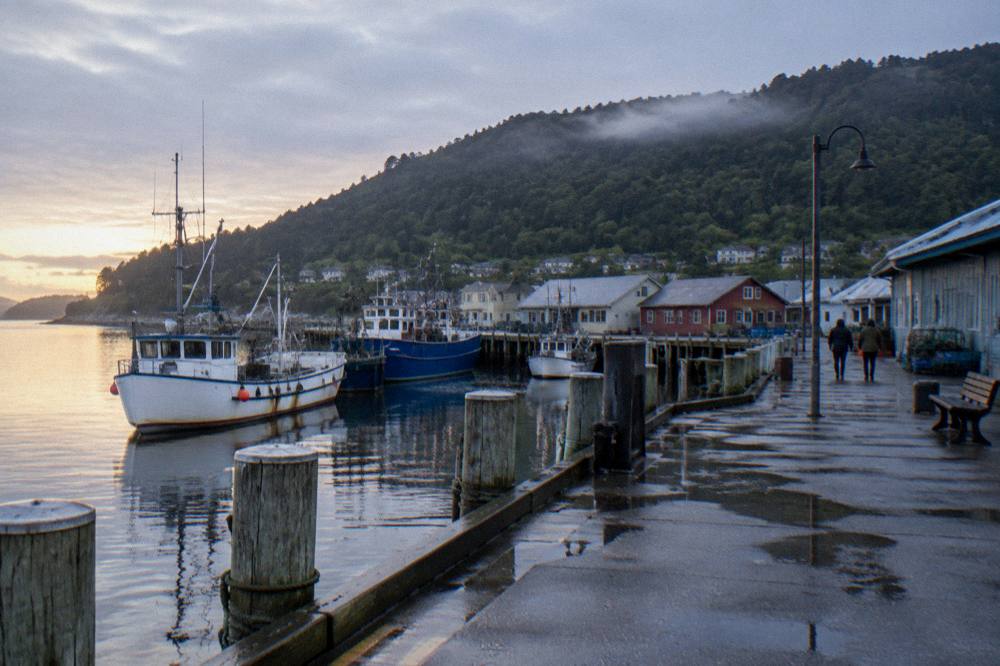
For the rest of the day, the town is compact and walkable. The Peoples Park stroll to Hogarth Falls and the Henty Dunes and Ocean Beach are free and fill an afternoon or a spare morning, and the evening play about the Sarah Island escape runs in town through the warmer months, though its current schedule should be checked directly. Strahan River Cruises compares the Gordon River sailings from both operators on one page, which is the quickest way to see every fare and departure side by side before you commit. The railway is another west coast drawcard, and the West Coast Wilderness Railway guide explains how it fits around a cruise day without pretending you can book it here.
Whatever you choose, the harbour mouth is the one constant. The convicts named it as the gate to their hell, the engineers of 1900 to 1902 rebuilt it, and every morning the cruise boats still thread the same gap between Macquarie Heads and Entrance Island, out past the fish farms and on into the dark water of the Gordon.
Common Questions About Hells Gates And Macquarie Harbour
What Is Hells Gates At Strahan?
Hells Gates is the narrow, shallow and dangerous entrance channel to Macquarie Harbour, between Macquarie Heads and Entrance Island, named by convicts sent to the Sarah Island penal station. Every Gordon River cruise from Strahan passes through or pauses at it. No official width figure exists for the channel.
Why Is It Called Hells Gates?
Convicts being transported to the Sarah Island penal station, established in 1822, saw the narrow harbour mouth as their entrance to hell, and the name stuck. The station closed in late 1833 after more than 180 recorded escape attempts.
How Big Is Macquarie Harbour?
Macquarie Harbour covers about 315 square kilometres with an average depth of 15 metres. One operator's FAQ describes it as three times the size of Sydney Harbour. The full cruise circuit is 65 nautical miles, about 120 kilometres.
Do All Gordon River Cruises Pass Through Hells Gates?
Yes. Both operators, World Heritage Cruises and Gordon River Cruises, include Hells Gates on their morning and seasonal dinner sailings, along with Sarah Island, the Heritage Landing boardwalk and a fish farm stop.
What Were The 1900 To 1902 Works At Hells Gates?
A breakwater was built and the entrance channel was dredged between 1900 and 1902 to make the harbour mouth safer for shipping. The breakwater is still visible from the cruise boats today.
How Much Does A Cruise Through Hells Gates Cost?
The morning sailings start from A$160 per person with World Heritage Cruises and from A$165 per person with Gordon River Cruises, both for the cheapest adult deck. The seasonal dinner cruises also start from A$160 per person. The booking pages show the live fare.